November 2024 release - Sharing series, new Padif, and more
Sharing series
It is now possible to share series with other ProFID instances, by securely exporting them and letting the recipient import them into their own instance.
Exporting a series
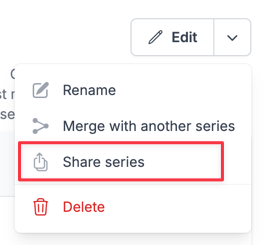
When sharing a series, you will be invited to enter a password to protect the file, and to choose which data you want to include in the export:
- Series images
- Series attachments
- Last published alert
General information like the name of the series, as well as the series material and contextual profiles, are always included in the export.
The export will not contain any information about the documents linked to the series, except for the number of documents linked and the span of seizure dates of those documents at the time of the export.
Importing a series
With a .pfd file in hand, the recipient can go to "Series > Import series" in the top menu, and upload the file.
Provided that the password is known to the recipient, they will be able to import the series into their instance.
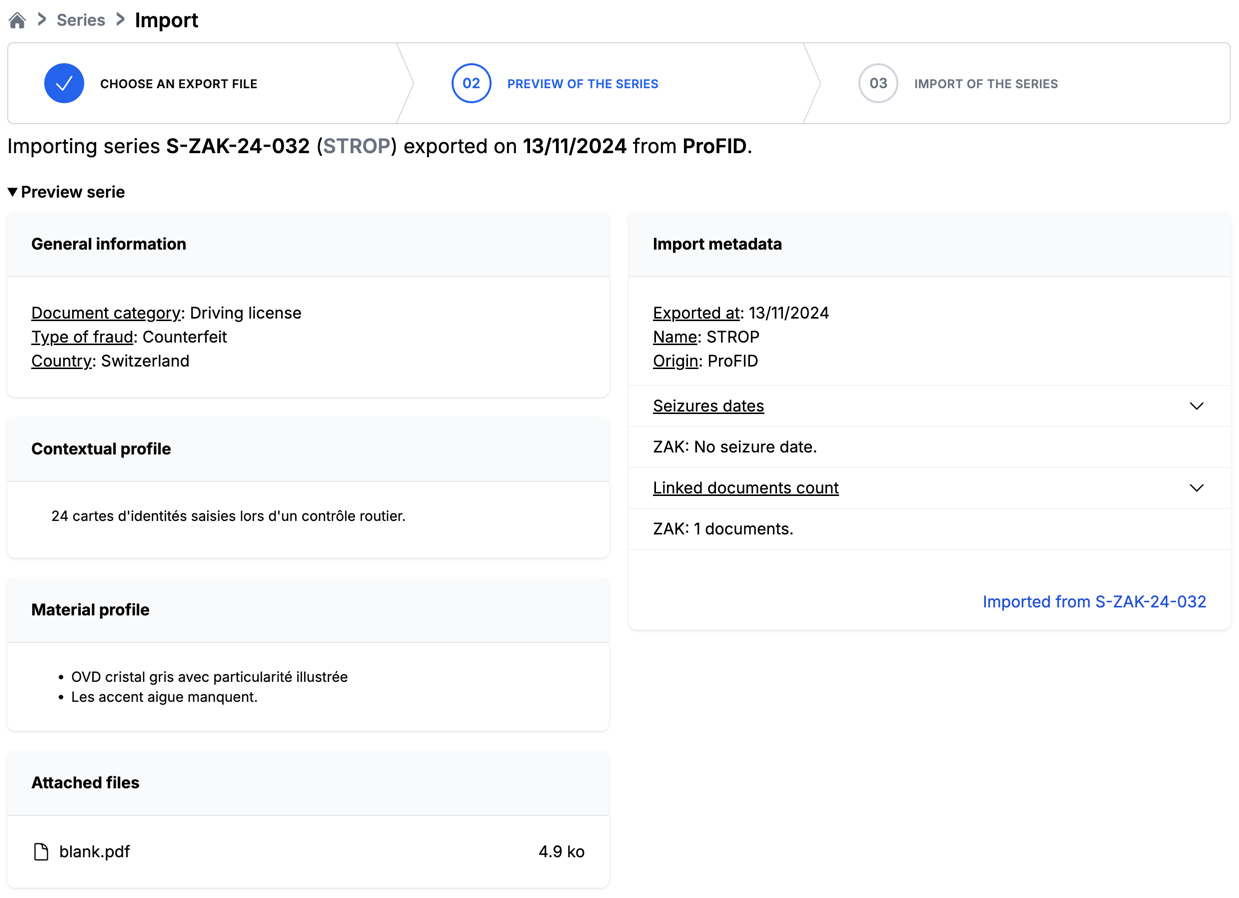
The new identifiers created for the imported series, are generated in the same way as regular series. They will contain the instance code of the instance in which the series is imported, the year and an incremental number. However when going to the series' page, you will notice that they will contain a reference to the exported series.
Imported series have the same permission rules as any other series, and they can be edited afterwards or have documents linked to them.
Series import / export is the first step towards a more open and interconnected ProFID. We hope that it will foster collaboration between countries and allow for more links to be established, helping the fight against organized crime.
New Padif
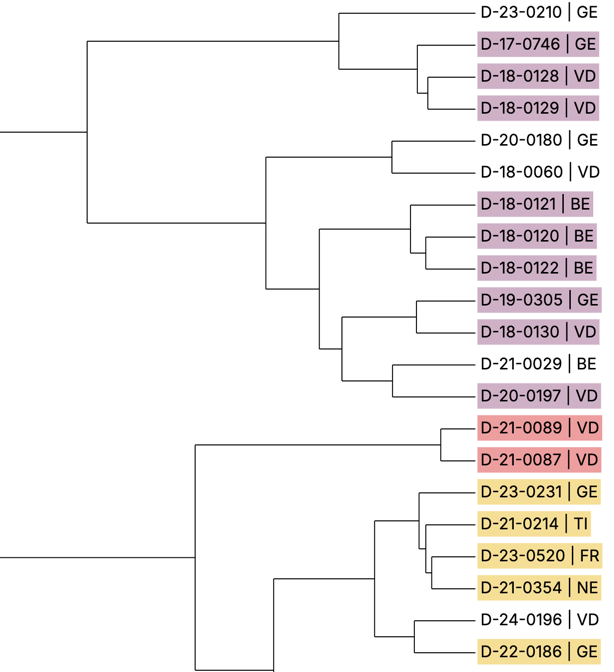
The new Padif, the automated document comparison algorithm to help ProFID users attribute documents to series, is now out of experimental phase and generally available to all users. The old version of Padif has been removed.
Padif rewrite
Padif, originally written in Python by Sydney Barthe, who was a student at Ecole des sciences criminelles, University of Lausanne, did not evolve since it was first integrated into ProFID, since the technology stack is very different from the rest of ProFID. Some known bugs were never fixed.
The new Padif, entirely rewritten in JavaScript, is more tightly integrated with the rest of the codebase and will give greater autonomy to the development team to fix bugs and evolve the algorithm. It improves some key parts of the process. For example the algorithm for aligning regions of interest in between documents has been rethought and improved.
New Padif features
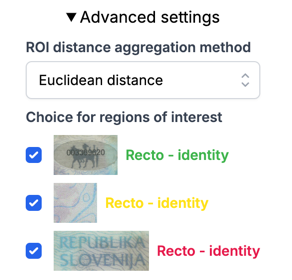
The new Padif allows for regions of interest to be included / excluded from the results, without the need to re-run the comparison. This will make the process of finding the right regions of interest for the analysis less tedious. It also allows to choose between different distance aggregation algorithms for creating the dendrogram.
Security improvements
A second security audit was conducted on the ProFID software.
Various minor security concerns have been identified and fixed to make ProFID even more secure.
Bug fixes
- Fix incoherent filter indicators in scan list page.
- Improve guiding borders around document QR codes to ensure they are cut correctly.
- Make sure only admin or editors have access to the list of ProFID users.